

Getting your car in the air shouldn’t feel like a risky move. Whether you’re changing oil or chasing that one stubborn bolt, solid ramps can make the job way less painful.
I went hands-on with everything from low-profile to extra-wide designs to figure out which ones truly deserve a spot on your shortlist of best car ramps.
Best Car Ramps in 2025
| Image | Model | Weight Capacity | |
|---|---|---|---|
 | Best Heavy-Duty Ramps for Everyday Use RhinoGear RhinoRamps MAXWeight Capacity: 16,000 lbs GVWR (≈ 4,000 lbs per ramp) Check Price | 16,000 lbs GVWR (≈ 4,000 lbs per ramp) | Check Price |
 | Best Ramps for Lightweight Vehicles Race Ramps RR-56Weight Capacity: 3,000 lbs per pair (1,500 lbs per ramp) Check Price | 3,000 lbs per pair (1,500 lbs per ramp) | Check Price |
 | Best Low-Profile Option Black Widow Plastic RampsWeight Capacity: 10,000 lbs per pair (5,000 lbs per ramp) Check Price | 10,000 lbs per pair (5,000 lbs per ramp) | Check Price |
 | Best Detachable Design Eastwood Detachable RampsWeight Capacity: 7,200 lbs per pair (≈ 3,600 lbs per ramp) Check Price | 7,200 lbs per pair (≈ 3,600 lbs per ramp) | Check Price |
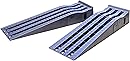 | Smartest Ramps for Low Cars MaxxHaul 50709Weight Capacity: 6,500 lbs per pair (3,250 lbs per ramp) Check Price | 6,500 lbs per pair (3,250 lbs per ramp) | Check Price |
- Not all ramps are created equal — cheap plastic units often crack, slide, or have the wrong angle. If you want to avoid stress and bruised ribs, go for smart design.
- Race Ramps RR-56 are best-in-class for light, low cars. If your curb weight is under ~2,800 lbs, they’re a dream. Otherwise, you’re pushing their limit — and your luck.
- RhinoRamps MAX bring the strength and flexibility for SUVs, trucks, and heavier sedans. PALD-certified and good up to 16,000 lbs GVWR — they’re built for bulk.
- MaxxHaul 50709 and Eastwood are the clever picks for wrenchers who want more room underneath. Their detachable designs make underbody access way easier.
- Ramp angle matters. Longer ramps = safer climbs, especially for lowered cars. Know your approach angle before you buy.
- Rule of thumb: curb weight ÷ 2 = minimum ramp capacity per side. And always add a 20% safety margin.
1. RhinoGear RhinoRamps MAX

These ramps are about as close as it gets to a universal solution for home garages. RhinoRamps MAX can handle up to 16,000 lbs of gross vehicle weight, and that’s not just a printed number — users are rolling full-size trucks and SUVs onto them with zero drama. The structure is plastic, but don’t let that fool you. They’re rugged, tough, and P.A.L.D. certified for a reason.
I like how they balance strength with portability. The pair stacks nicely to save floor space, and they’re light enough to haul around without a second hand. The 17° incline is moderate, making them usable for many sedans and crossovers — but if your car’s riding low, you’ll need a more gradual slope. The surface grip works well overall, though a polished floor can still reduce traction during approach.
Pros:
- Extremely durable yet lightweight
- Handles trucks and SUVs with confidence
- Stacks for compact storage
- Reliable grip on most surfaces
Cons:
- May slide slightly on smooth concrete floors
- Not ideal for lowered vehicles
2. Race Ramps RR-56 Car Service Ramps

p>I’ve gone through enough sketchy ramps in my time — plastic ones that flex, steel ones that slide, and DIY wood monsters that look like Jenga towers. The Race Ramps RR-56? Different story. These things are solid and feel purpose-built for low-clearance, lightweight vehicles — think compact coupes, small sedans, or weekend track cars.
The 10.8° incline is gentle enough to keep even bumper-hugging rides happy. I drove up without scraping a thing. And while they look massive at 56″ long, that extra length is exactly what makes them so safe and smooth to use. There’s no lurch, no guessing — just a clean, controlled climb. With a 3,000 lb weight limit per pair, they’re ideal for cars under ~2,800 lbs curb weight. Heavier vehicles? Look elsewhere — these weren’t made for full-size sedans or SUVs.
What surprised me most? The material. They’re not metal — they’re made of high-density expanded polystyrene with a hybrid polyurea shell. Sounds fancy, but what it means is they’re light as hell (about 10 lbs each), don’t crack, don’t rust, and don’t ruin your floor. You can grab one in each hand and toss them on a shelf when you’re done. The integrated straps are a nice touch too.
The only downside? Yeah, they’re pricey. And they do take up more room than those tiny folding plastic ramps. But after using these, I honestly couldn’t go back. They stay put on any surface, don’t deform under load, and I finally feel confident sliding under the car without wondering if I’m about to meet my maker.
Pros
- Extremely stable and non-slip — even on smooth garage floors
- Perfect incline for low-clearance, lightweight cars
- Lightweight but solid — super easy to carry and store
- Durable materials that won’t rust, crack, or gouge your floor
Cons
- Bulky — take up noticeable storage space
- Not suited for heavier vehicles (over ~3,000 lbs)
3. Black Widow Plastic Car Service Ramps

If you’ve got a car that sits low — or you’re just tired of dragging out a jack for every oil change — this set from Black Widow might be exactly what you need. They lift the vehicle 6.25″ off the ground, which is more than enough room for maintenance tasks, but their biggest strength is the slope: low enough to avoid spoiler damage, even on sportier vehicles.
Construction is surprisingly sturdy for a plastic set. Each ramp handles up to 5,000 lbs, giving you a 10,000 lb capacity per pair. The internal grid design cuts weight without losing support, and the open-style channels help keep water or dirt from accumulating — especially handy if you’re working outdoors or in winter. Just be cautious on smooth garage floors — while the rubber feet do help, some users ended up using anti-slip mats underneath for extra safety.
Pros:
- Low enough for front-lip clearance
- Sturdy structure with drain-through design
- Lightweight and easy to store
Cons:
- May slide on slick concrete without mats
4. Eastwood Removable Poly Car Ramp Set

Most ramps are either too short or too steep — Eastwood’s take on the problem is simple: make them long, wide, and easy to take apart. This two-piece design separates the approach section from the platform, letting you drive up smoothly and then remove the ramp’s base for full creeper access underneath. That’s a major plus if you’re working in tight spaces.
They feel rock solid during use, rated at 3.6 tons total, and the traction is reliable even on smooth garage floors. At over 10 inches tall, you get solid clearance, though a few users did mention they wouldn’t mind even a bit more lift. Storage is where these shine — pop the pieces apart, and suddenly they fit in your trunk, trailer, or shelf without a fuss. These aren’t budget ramps, but once you’ve tried them, you’ll probably stop using anything else.
Pros:
- Excellent grip and entry angle
- Detachable design makes access and storage easier
- Surprisingly stable on slick garage floors
Cons:
- Some may find the lift height just a bit short
5. MaxxHaul 50709

I’ve been looking for a way to get low-clearance cars up on ramps without scraping or sweating. The MaxxHaul 50709 ramps nailed it. That low incline makes a huge difference — even lowered vehicles climb up smoothly without any bumper drama.
What really makes these shine is the detachable center. Once the car’s up, you can remove the middle section and get a lot more working room underneath. It’s actually smart. The ramps are also pretty wide — no worries about tires hanging off the edge like with cheaper sets.
They’re made of industrial-grade plastic, and honestly, they feel solid. I’m not usually one to trust plastic when I’m under 3,000 pounds of metal, but these stayed planted and didn’t flex on my slick garage floor. If you’re paranoid like me, toss in a backup jack stand for peace of mind — but functionally, they hold up just fine.
Downside? Yeah, they’re big. Not something you just toss in a corner. But that’s the trade-off for something this stable and user-friendly.
Pros:
- Gentle incline — perfect for low-clearance vehicles
- Detachable center section gives you more working room
- Wide enough for performance tires — no overhang
- Grippy and stable, even on smooth concrete
Cons:
- Bulky to store
6. Ironton 12,000-Lb. GVW Poly Car Ramp Set

These Ironton ramps hit a sweet spot for home mechanics who want strength without the heft. They’re rated for 12,000 lbs per pair and built from impact-resistant polymer that doesn’t rust, chip, or weigh you down. I’ve rolled compact sedans, SUVs, and even light-duty trucks onto these — they flex slightly under pressure but never feel unstable.
The incline is gentle enough for lower vehicles, and the 6.7″ lift gives decent clearance for oil changes and inspections. I like the grid-style tread and the integrated rubber feet, though like most plastic ramps, you’ll still want to be cautious on smooth concrete. The weight makes them easy to carry and store, especially if you’re using them regularly in a garage.
Pros:
- Solid weight capacity for most vehicles
- Lightweight and corrosion-resistant
- Good clearance without being too steep
Cons:
- Can slide on slick surfaces if not secured
How to Choose the Right Car Ramps: A Mechanic’s Real-World Guide
Look, I’ve been turning wrenches for over two decades, and I’ve seen more DIY disasters from cheap ramps than I care to count. Cracked plastic sending cars sliding backward, wrong angles that leave you high-centered, ramps that fold like a house of cards under a heavy truck. Trust me, buying ramps isn’t as straightforward as grabbing the first pair you see at the auto parts store.
Weight Capacity: Your Life Depends on Getting This Right
First things first – and I cannot stress this enough – you need to know your vehicle’s actual curb weight, not the GVWR (Gross Vehicle Weight Rating) that includes passengers and cargo. We’re talking about what your car weighs sitting empty in your driveway. You can find this on the driver’s side door jamb sticker or look it up in your owner’s manual.
Here’s where people mess up: they assume ramps are rated per ramp, but most manufacturers rate them per pair. So if you’ve got a 4,000-pound sedan, each ramp needs to handle 2,000 pounds minimum. But here’s my rule – always go 20% over your actual weight. Cars aren’t perfectly balanced, and you might be working on a slope without realizing it.
Reputable ramp manufacturers follow strict quality control standards and testing protocols. Look for ramps that have been tested to industry standards and come with clear weight ratings and safety certifications.
The Angle Game: Why Your Lowered Honda Keeps Scraping
Ground clearance is everything, especially if you’re dealing with sports cars, lowered vehicles, or anything with a front air dam. I’ve seen guys spend twenty minutes trying to get their Civic up a steep ramp, scraping and grinding the whole way.
The magic number is 17 degrees or less for most lowered cars. Stock vehicles can usually handle up to 20 degrees, but why risk it? Longer ramps generally give you a more gradual approach angle, which is why I always recommend going longer rather than shorter. A 67-inch ramp will have a much gentler slope than a 45-inch one at the same height.
Pro tip: measure your approach angle at home. Jack up your car to the working height you need, then measure the distance from the ground to that point. Use some basic trigonometry (or an online calculator) to figure out what ramp length you need for your desired angle.
Materials: The Plastic vs. Metal Debate
I keep both types in my shop, and here’s why. High-density polyethylene (HDPE) ramps are fantastic for most DIY work. They’re lightweight, won’t rust, and modern plastic formulations can handle serious weight. Companies like Rhino Ramps and Race Ramps make some bulletproof plastic units that I’ve seen hold up for years.
But if you’re running a shop or dealing with heavy trucks regularly, steel is still king. Powder-coated steel ramps will outlast plastic in commercial environments, and they don’t get brittle in extreme cold like some plastics can. The downside? They’re heavy as hell and will slide on smooth concrete unless they have good rubber feet.
Here’s something most people don’t consider: heat. If you’re working in hot climates or storing ramps in un-air-conditioned spaces, cheap plastic can soften and deform. I’ve seen budget ramps turn into automotive taffy in Arizona summers.
Size Matters: Width, Length, and Your Garage Reality
Tire width compatibility is huge. Most ramps are designed for tires between 8-12 inches wide, but if you’re running wider performance tires or skinny eco tires, check the specifications. I’ve seen too many people try to balance on ramps that are too narrow for their tires.
Length is your friend, especially for low cars. Short ramps might fit better in your garage, but they create steeper angles. I generally recommend going as long as your space allows. And speaking of space – measure your storage area before buying. Nothing’s more frustrating than ramps that don’t fit in your garage.
Width-wise, look for ramps that are at least 9 inches wide. Anything narrower gets sketchy when you’re trying to align your wheels, especially if you’re working alone.
Safety Features That Actually Matter
Non-slip bases aren’t optional. I’ve seen ramps shoot out from under cars like hockey pucks on smooth garage floors. Look for ramps with large rubber contact patches or textured bases that grip concrete.
Top-end safety features include built-in tire stops – little lips that prevent you from driving off the end. Some ramps have textured driving surfaces for better tire grip, and a few premium models include side barriers to keep you centered.
Handles might seem like a small thing, but when you’re wrestling with 40-pound steel ramps, you’ll appreciate having something to grab besides sharp edges.
Common Mistakes That’ll Ruin Your Day
- Using ramps on uneven ground: Never, ever try to use ramps on sloped driveways or unlevel surfaces. You’re asking for trouble.
- Ignoring the weight rating: Just because it says “6,000 pounds” doesn’t mean it’s safe for your 5,800-pound truck. Factor in dynamic loading and safety margins.
- Wrong tire size: Using ramps designed for different tire widths is like wearing the wrong size shoes – it might work, but it’s not safe.
- Speed demon approach: Crawl up ramps slowly and steadily. This isn’t Fast & Furious.
The Real Cost of Cheap Ramps
You can grab ramps for $40 at the big box store, or spend $150 on professional-grade units. The difference isn’t just marketing fluff. Cheap ramps often use recycled plastic that gets brittle over time, have inadequate weight ratings, or use thin steel that flexes under load.
I’ve seen budget ramps crack after just a few uses, especially in temperature extremes. The good news is that mid-range ramps around $80-$120 offer most of the benefits of premium units without breaking the bank.
What the Pros Use
In professional shops, you’ll see brands like Bendpak, Rotary, and BendPak QuickJack systems for serious lifting. For portable ramps, Race Ramps, Rhino Ramps, and Discount Ramps are popular choices. These companies have been around for decades and understand the engineering that goes into safe lifting equipment.
The Automotive Service Association (ASA) recommends that all lifting equipment be inspected regularly and meet industry safety standards. Even if you’re just a weekend warrior, following professional guidelines isn’t a bad idea.
My Personal Recommendation
After years of using different ramps, I keep two sets in my shop. Lightweight plastic ramps (around 12 pounds each) for quick jobs like oil changes, and longer steel ramps (30+ pounds each) for detailed undercarriage work. It’s not overkill – it’s having the right tool for the job.
For most DIYers, I’d recommend starting with a good set of plastic ramps in the $80-$120 range. Look for ones that are at least 67 inches long, rated for 25% more than your car’s weight, and made from high-density polyethylene. Brands like Rhino Ramps or Race Ramps are solid choices that won’t let you down.
Remember, ramps are a long-term investment in your safety and convenience. Buy once, cry once – but buy cheap, and you might cry a lot more than once. Your back, your knuckles, and your bank account will thank you for choosing quality the first time around.