

Few things are more frustrating than a dead battery when you’re ready to hit the road or fire up a parked vehicle. Whether it’s your classic car tucked away for the winter, a motorcycle that only roars in the summer, or even a lawn tractor you’re not using for a while, maintaining battery health is crucial. That’s where the best battery maintainer can save the day—quietly keeping your battery topped up and ready whenever you need it.
I’ve spent the past few months putting several top-rated models to the test across different vehicles and seasons. What impressed me might surprise you. Some are compact but powerful, a couple felt overly complicated for what should be a simple task, and one or two stood out for their no-nonsense reliability. Let’s just say not all maintainers are created equal—and the right one for you depends on more than just price. Keep reading as I break down my favorite picks and what to consider before you plug anything in.
Best Battery Maintainers in 2025
| Image | Model | |
|---|---|---|
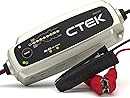 | Best Overall CTEK MXS 5.0Editor's Choice  Check Price | Check Price |
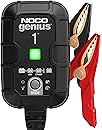 | Best Compact NOCO Genius1Check Price | Check Price |
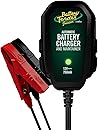 | Best for Powersports Battery Tender Jr.Check Price | Check Price |
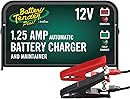 | The Reliable Classic Battery Tender PlusCheck Price | Check Price |
 | Best Maintainer For Deeply Discharged Batteries Optima Digital 400+Check Price | Check Price |
1. CTEK MXS 5.0 Smart Battery Maintainer
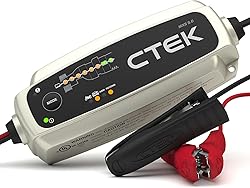
Of all the clever gadgets that have made their way into my garage, this CTEK MXS 5.0 is one of the few that truly deserves shelf space. It’s not flashy, but it does its job with a kind of quiet precision that really impressed me. I tried it out on a borderline battery that had been sitting too long in an unused vehicle—resting voltage was around 11.6V, and frankly, I had my doubts. But let it run overnight, and boom—full charge, green light, and 12.6V on the meter. Color me converted.
One of the things I really appreciate is how this unit doesn’t just charge—it goes through a full diagnostic and reconditioning process in stages. That recondition mode is the real magic here. I’ve seen it breathe life back into batteries I assumed were goners. It’s pretty much set-it-and-forget-it, which is perfect for folks like me who like hands-off maintenance. The long cord is a plus, and the compact size means I can slip it under the hood without needing any creative contortions. On the downside, the instructions weren’t stellar, so plan to brush up with a YouTube video or two.
Pros:
- Exceptional reconditioning mode that can revive tired batteries
- Fully automatic 8-step process — plug it in and walk away
- Compact and rugged build — splash, dust, and spark-proof
- Works with both standard lead-acid and AGM batteries
Cons:
- manual could be clearer, especially for first-timers
- Mode button may wear out with heavy use over time
2. NOCO Genius1 Compact Smart Maintainer
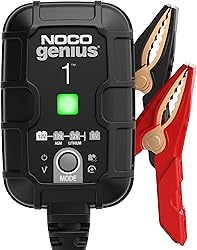
There are few things more annoying than turning the key and hearing… nothing. That’s why I added the NOCO Genius1 to my garage arsenal. It may be pocket-sized, but it punches well above its weight when it comes to maintaining batteries. I use it for my mower, motorcycle, and even a stored SUV—and every time I go to fire them up, they’re ready to roll.
Setup is a cinch—just plug it in, hook it up, and forget about it. It handles the rest intelligently, toggling between charge and maintenance automatically. What I find especially handy is the thermal compensation—it adapts based on ambient temperatures so I don’t have to second-guess its performance during those frosty nights or warm garage days. And yes, this little guy can even wake up batteries that are almost flatlined, as long as you’re patient. It’s clearly designed with safety and longevity in mind, which helps me sleep better when I leave it connected over the winter.
Now, while I love the compact design, I do wish the clamps had a bit more bite—on smaller terminals, it’s a bit of a dance to get a perfect grip. But once it’s on, it delivers consistently.
Pros:
- Compact design – easy to store and use
- Smart temperature-adjusting charging for seasonal flexibility
- Safe to leave connected long-term without worry
- Works on a wide range of battery types and voltages
Cons:
- Clamps could feel more secure on smaller terminals
- At 1 amp, it’s not meant for fast charging a dead battery
3. Battery Tender Junior 12V 750mA Maintainer
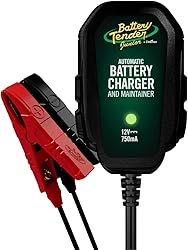
When it comes to keeping my motorcycles and small vehicles ready to go, the Battery Tender Junior has earned its perk spot on the garage wall. It’s compact, reliable, and pretty much foolproof, which is just how I like my battery maintainers. I’ve had this hooked up to my bike all winter, and when the first warm day rolled around, the engine turned over without hesitation. That’s the kind of performance I can get behind.
I genuinely appreciate how little attention it demands. Hook it up, and it handles the rest — no overcharging, no guesswork. The LED indicators give me a quick visual on charge status, and the float mode kicks in exactly when I need it to. It’s not a speed charger, but that’s not its job. This thing was clearly built with long-term battery health in mind. I’ve even seen it rescue a deeply drained battery, albeit slowly. If you’ve got anything that sits idle for weeks or months, this little guy could be your battery’s best friend.
Pros:
- Compact and easy to store or mount
- Automatic charge with float mode for long-term maintenance
- Reliable over months of continuous use
- Simple LED indication for battery status
Cons:
- Slower to recharge very low batteries
- Tiny indicator light can be tricky to read at a glance
4. Battery Tender Plus 1.25A Maintainer
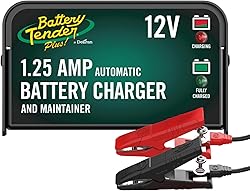
I’ve been using the Battery Tender Plus 1.25A for a while now, and I have to say, this thing hits the sweet spot between simplicity and serious smarts. It’s especially good for keeping seldom-driven vehicles like motorcycles, convertibles, or even lawn mowers ready to go without any fuss. It’s a plug-it-in-and-forget-it kind of deal, and in garage life, that’s golden.
One thing that stood out to me is the 4-step charging process – not something you notice right away, but it does reassure you that your battery isn’t just being fried on a trickle. Plus, the quick-disconnect cabling is a small feature that makes a big difference when it’s cold out and you don’t feel like fiddling with clamps for 10 minutes. Most importantly, it’s built like a little tank. The cables feel durable, the housing doesn’t feel cheap, and the indicator lights are actually useful (and visible across the garage).
Pros:
- Reliable smart charging with multiple battery types
- Durable feel – nothing about it screams “cut corners”
- Perfect for vehicles stored long-term or seasonally
- Quick disconnects make hook-ups hassle-free
Cons:
- Only supports 120V input – not ideal for use outside North America
- Not the cheapest option, but worth it for the longevity
5. Optima Digital 400+ Smart Maintainer

The Optima Digital 400+ might just be the secret weapon for breathing life back into a seriously depleted battery. I tested it on two nearly DOA batteries – one deep cycle AGM barely clinging to 5.9 volts, and another regular car battery down to 3.9 volts. Both came back from the brink after spending a few methodical days hooked up to this unit. It took patience, but seeing both batteries firing up strong afterward was impressive, to say the least.
Setup is a breeze with the Digital 400+; it’s got a slick, automotive-grade build that includes a user-friendly interface and a color-coded status bar. One thing I appreciated right away was its ability to automatically analyze, charge, condition, and maintain without extra input – it truly is a plug-it-in-and-let-it-think-for-itself kind of tool. And if you care about safety, this one has reverse polarity protection, spark-free tech, and it even adjusts for temperature. For something that delivers precision and resilience wrapped up in a compact, wall-mountable body, it’s a strong contender for long-term battery care.
Pros:
- Recovers deeply discharged batteries effectively
- Fully automatic with easy-to-read display
- Compatible with a wide range of battery types
- Temperature compensation and overload protection for safe charging
Cons:
- Charging process can take multiple days for deeply depleted batteries
What to Look for When Buying a Battery Maintainer
Charging Technology and Smart Features
Look, I’ve been doing this for over 20 years, and trust me when I say that not all battery maintainers are created equal. The best units use multi-stage charging algorithms that automatically adjust voltage and current based on your battery’s condition. These smart chargers can detect sulfation, test battery health, and switch to maintenance mode without you lifting a finger.
Avoid those cheap trickle chargers from the discount bin — they’re basically one-trick ponies that can actually overcharge and damage your battery if left connected too long. Modern microprocessor-controlled units follow strict charging protocols, and many comply with federal testing protocols for battery maintenance systems to ensure they won’t fry your expensive AGM or gel batteries.
Amperage Output and Battery Compatibility
Here’s where people get confused — bigger isn’t always better when it comes to amperage. For maintenance, you typically want something in the 1.5 to 5-amp range. I learned this the hard way when a customer brought in his motorcycle with a fried charging system because he used a 10-amp charger meant for trucks.
Match the maintainer’s output to your battery type and size. Small motorcycle batteries need gentle 1-2 amp charging, while larger car batteries can handle 3-5 amps safely. The key is finding a unit that can handle multiple battery types — lead-acid, AGM, gel, and even lithium if you’re running modern equipment.
Safety Features and Certifications
Don’t mess around with safety when it comes to electrical equipment. Look for units with reverse polarity protection, spark-proof connections, and automatic shut-off features. I’ve seen too many garage fires start from cheap chargers without proper safety circuits.
Check for certifications like UL listing or compliance with NIST battery testing standards. These aren’t just fancy stickers — they mean the unit has been tested to handle real-world conditions without catching fire or shocking you. Also, make sure it meets EPA compliance requirements for battery maintenance equipment if you’re running a commercial operation.
Build Quality and Weather Resistance
Your maintainer needs to survive garage life, and garages aren’t exactly clean rooms. Look for units with solid construction, good cable quality, and weather-resistant housings if you’ll be using them outdoors. Those flimsy plastic cases crack in cold weather — been there, replaced that.
Pay attention to cable length and clamp quality too. Nothing’s more frustrating than trying to reach your battery with 3-foot cables, and cheap clamps lose their grip over time. The better units come with 6-foot cables and spring-loaded clamps that actually stay put.
Display and Monitoring Capabilities
A good display tells you what’s actually happening with your battery. Basic LED indicators are fine for simple maintenance, but if you’re serious about battery care, get something with a digital readout that shows voltage, charging current, and battery condition.
Some of the newer units even have smartphone connectivity and can send you alerts when charging is complete. Sounds gimmicky, but it’s actually pretty useful when you’re maintaining multiple vehicles or equipment. Just don’t expect miracles from the apps — they’re usually basic but functional.
Key Shopping Considerations
- Multi-stage charging with automatic switching between bulk, absorption, and float modes
- Temperature compensation to adjust charging based on ambient conditions
- Desulfation mode for recovering neglected batteries
- Multiple connection options (clamps, ring terminals, 12V outlet plugs)
Remember, a quality battery maintainer is an investment that pays for itself by extending battery life. I’ve seen cheap units destroy $200 batteries trying to save $50 on the charger. Don’t be that guy.