

There’s nothing quite like that sinking feeling when you turn the key and all you get is a weak click. Dead battery. Been there too many times myself — whether it was a cold morning or I left the dome light on overnight. That’s why having the best jumper cables in your trunk isn’t just a smart move, it’s non-negotiable. Not all cables are created equal though, and some might leave you more frustrated than if you’d just called roadside assistance in the first place.
I’ve tested a bunch of cables over the years, from those bargain bin spaghetti wires that barely spark to heavy-duty beasts that could probably jump-start a semi. In this roundup, I’ll share which ones actually deliver when your battery doesn’t. If you’ve ever been stranded with a dead car and no help in sight, keep reading — your future self will thank you.
Best Jumper Cables in 2026
| Image | Model | |
|---|---|---|
 | Best for Daily Drivers Energizer 16FT 6GAEditor's Choice  Check Price | Check Price |
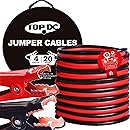 | Most Reliable All-Rounder TOPDC 4-Gauge 20ftCheck Price | Check Price |
 | Best Value for Money Cartman 4-GaugeCheck Price | Check Price |
 | Best Build Quality & Case GOODYEAR 4-GaugeCheck Price | Check Price |
 | Ultimate Rescue Gear AutoChat 0-GaugeCheck Price | Check Price |
Wire Gauge and Length: The Numbers That Actually Matter
Trust me on this — gauge matters way more than flashy packaging or brand names. After jumpstarting everything from dead Civics to diesel pickups, I can tell you that 4-gauge cables are your sweet spot for most passenger cars. Anything thicker like 2-gauge or 1-gauge is overkill unless you’re dealing with massive V8s or diesels regularly. Don’t let some salesman talk you into 6-gauge or 8-gauge cables either — they’re fine for motorcycles, but you’ll be sitting there cranking for ages on anything with a real engine.
Length is where people get weird ideas. You want 20 feet minimum, but 25 feet is even better. I learned this the hard way when I had to jumpstart a buddy’s truck that was parked nose-first against a concrete barrier — the good Samaritan’s car could only get so close. Anything shorter than 16 feet and you’ll find yourself in situations where the geometry just doesn’t work. Sure, longer cables have slightly more resistance, but the convenience factor outweighs that minor loss.
Storage and Portability
Heavy-duty cables are great until you realize they weigh 15 pounds and take up half your trunk space. Most quality 4-gauge, 20-foot cables will weigh around 8-10 pounds, which is manageable. They usually come with a carrying bag or case — keep it, because loose cables turn into a tangled mess that’ll drive you crazy when you actually need them.
Consider where you’ll store them too. Trunk storage means they need to handle temperature extremes and maybe some moisture. Keeping them in a plastic storage box isn’t a bad idea, especially if you live somewhere with harsh winters where road salt gets on everything.
1. Energizer 16FT 6-Gauge Jumper Cables

I’ve had my fair share of tangle-prone, underperforming jumper cables over the years, and I can confidently say these Energizer cables are a refreshing change. At 16 feet long and 6-gauge thick, they offer a solid blend of reach and power that makes them a handy go-to for most vehicles, whether it’s a compact or a full-size SUV. The clamps grip securely, even on fidgety terminal placements, and the cables themselves feel durable without turning into stiff rods on cold mornings.
The included carrying bag is a nice touch, keeping things neat and easy to stash in the trunk. And while these aren’t industrial-grade monster cables meant for semis or commercial rigs, they’ve proven themselves more than capable in everyday jump-start scenarios. The copper-clad aluminum construction keeps them lightweight, and they’ve stayed reliably flexible despite a few frosty mornings here in the Midwest.
Pros:
- Great length for most jump-start setups
- Flexible and easy to handle, even in cold weather
- Clamp grip is secure on various battery types
- Carrying case keeps storage tidy
Cons:
- Not ideal for very large, commercial-grade engines
- Copper-clad aluminum construction isn’t quite as efficient as solid copper
2. TOPDC 4-Gauge 20ft Heavy-Duty Cables

I’ve been around enough dead batteries to know that not all jumper cables are created equal. The TOPDC 4-gauge cables really earn their keep, especially if you drive something bigger than a compact sedan. Their 20-foot reach is a huge plus in tight parking lots or when your car’s nose isn’t bumper-to-bumper with your buddy’s truck. No need to play automotive Tetris just to get a jump.
Clamp quality can make or break the experience, and here it’s top-notch. These alligator-style clamps grip like they mean it—and they’re rugged enough to handle both top-post and side-terminal batteries without wiggling loose. Even better, the PVC insulation stays flexible in cold weather, which is kind of essential when you’re stranded in a snowy parking lot. They also come neatly packed in a carry bag (though I’ll admit—it takes a little origami magic to get them back in).
Pros:
- Long 20-foot cables make jumps easier in awkward parking layouts
- Thick 4-gauge wire provides solid power transfer
- Heavy-duty clamps grip tightly to all battery types
- Flexible and weather-resistant insulation, even in cold temps
Cons:
- Carry bag could be more forgiving—packing them up is a challenge
3. Cartman 4-Gauge 20ft Jumper Cables

If you’ve ever tried to jump a car in a weird parking situation—say, nose-in at the grocery store while another car’s parked sideways—then you know how valuable long jumper cables truly are. The 20-foot length on these Cartman cables is a game changer. I’ve used these to bridge the awkward gap between a big pickup and a sedan without breathing down someone’s bumper. The 4-gauge wire is solid for the job, and those clamps? They’re beefy enough to grip like a vice and wide enough to work on both top and side battery posts.
It’s clear Cartman wasn’t just checking boxes here. The kit comes with a carrying bag that actually fits the cables (novel concept, right?), and even tosses in gloves and a wire brush—little touches that make a big difference when it’s 20 degrees and your hands are freezing. The insulation on the cables stays flexible in the cold, too, which is a major plus. For under 25 bucks, it’s hard to beat the overall package.
Pros:
- Generous 20-foot length is perfect for tough-to-reach jumps
- Thick 4-gauge wiring handles full-size vehicles with ease
- Works with both top and side-post batteries
- Comes with storage bag, gloves, and terminal brush
Cons:
- Not pure copper—uses copper-coated aluminum (CCA)
- A bit heavy and bulky to store in smaller cars
4. GOODYEAR 4-Gauge Heavy Duty Cables

When I throw something in my trunk and forget about it until a roadside emergency, I need to know it’s going to work – no questions asked. That’s why I appreciate these GOODYEAR 4-gauge jumper cables. They’re husky, reliable, and built like they actually expect to be used, which is not something I can say for a lot of the flimsy options out there.
At 16 feet long, they give you the flexibility we often wish for when two vehicles can’t quite get nose-to-nose. The copper wires are thick and mean business – when it’s time to jump-start a battery, these don’t mess around. I found the insulation holds up well in cold conditions, staying flexible rather than stiff and uncooperative. The clamps are solid, too – no wimpy springs or questionable grip, just a strong bite that won’t slip.
The only thing that made me raise an eyebrow was the carrying case. It’s nice that they included one, but I had to channel my inner origami artist to get the cables back in. Could’ve used just a bit more breathing room.
Pros:
- True heavy-duty 4-gauge cable delivers solid and consistent current
- Generous 16-foot length makes connecting vehicles easy
- Stays flexible even in cold weather
- Clamps are strong and grip securely
- Compact storage case included
Cons:
- Carrying case is tight and tricky to repack
5. AutoChat 0-Gauge 30ft Jumper Cables

When I got my hands on the AutoChat 30-foot, 0-gauge jumper cables, two things became immediately clear: these things are built to handle serious current, and you’re not going to be left fumbling because your cables came up short. At 30 feet long, they’re ideal for urban parking lots, tight garages, or even helping out a truck parked a few spaces over. I like the peace of mind that comes with not having to do a five-point turn just to get close enough for a jump.
Construction-wise, this set is rugged. The thick, heavy-duty cables have the kind of heft you expect from serious gear, and the clamps are strong, with excellent bite. They’re not all-copper, but the copper-coated aluminum does the job surprisingly well without sending the price into orbit. And the extras — gloves, brush, and a hard case — are more than just fluff. They actually make storage and emergency readiness pretty hassle-free.
Pros:
- Extra-long 30-foot cables provide great reach
- 0-gauge wiring handles high current reliably
- Heavy-duty clamps with excellent grip
- Comes with useful accessories and a carry case
Cons:
- Not 100% copper — uses copper-coated aluminum
- A bit bulky to store if you have limited trunk space
Clamp Quality: Where Cheap Cables Fall Apart
Here’s where I see the biggest difference between decent cables and garbage ones — the clamps. Good clamps should have thick, heavy-duty copper or brass contact points, not some thin metal that’ll corrode after one winter. The jaws need to open wide enough to grab onto side-post batteries (looking at you, GM vehicles) and have enough grip strength that they won’t slip off when you’re cranking the engine.
Insulated handles are non-negotiable if you value your fingers. I’ve seen too many people get zapped because their bargain cables had exposed metal right where you naturally grip them. The NHTSA includes jumper cables in its recommended winter emergency supplies, so a dependable set deserves a spot in your trunk.
Testing Clamp Strength
Before you buy, physically test the clamps if possible. They should require decent hand strength to open and should snap shut with authority. Flimsy spring tension means they’ll work loose during the jumpstart process, which is both dangerous and frustrating. The contact surfaces should be clean metal, not painted or coated with anything that’ll interfere with conductivity.
Insulation and Weather Resistance
Cable insulation isn’t just about pretty colors — it’s about staying flexible when it’s 10 below zero. Cheap PVC gets hard as a rock in cold weather and cracks after a few years. Look for cables with actual cold-weather rating, usually marked as staying flexible down to -40°F or similar. I keep my cables in the trunk year-round, and the temperature swings from summer heat to winter cold will destroy inferior insulation pretty quickly.
The connection between the cable and clamps is another weak point. Quality cables have the wire properly crimped or welded to the clamp, not just twisted together and covered with heat shrink. A loose connection here means you’re losing power right where you need it most, and it’s a common failure point on cheaper cables.
Safety Features and Certifications
Some newer cables come with built-in safety features like LED indicators or even reverse polarity protection. The LED thing is actually pretty handy for nighttime jumpstarts — helps you see what you’re doing without juggling a flashlight. Reverse polarity protection sounds great in theory, but honestly, if you’re connecting cables backwards, you’ve got bigger problems than what your cables can fix.
I put more stock in clear specs than a “heavy-duty” label slapped on the bag. Look for a manufacturer that spells out the wire gauge, conductor material, and cold-weather rating so you know what you’re paying for. If the packaging makes big promises but skips the basic specs, I keep looking. And if a cable set claims reverse polarity protection, check the instructions to see what that means: a warning light and a system that blocks an incorrect connection are two different things.